Showing posts with label art. Show all posts

Monday, March 2, 2020

Origins of the Golden Fleece Myth

    In European culture seeking wisdom - especially hidden knowledge - finds its reflection in the symbols associated with gold: the Golden Fleece, the Philosopher’s Stone and the Holy Grail.  For all the qualities it embraces - this eternal and most noble of metals - gold was recognised as the metal of the sun.  It has become the foremost physical medium for the expression of men’s spiritual endeavours and the scientific knowledge about working gold is seen as one of the revelations of wisdom itself.

Detail on a 18th century BC cup from Trialeti depicting a religious ceremony.
(Author's Collection. Copyright 2020)

  The two phenomena: gold and knowledge, especially the knowledge of gold amongst the Colchians, were the genesis for rationalising the myth of the Golden Fleece.  It was this Golden Fleece that was the main goal of the first long-distance maritime adventure in mankind’s recorded history.  The Greek philosopher and mythographer Euhemerus went so far as to interpret the Golden Fleece as a technique of writing in gold on parchment or a book written on skins which describes the method of obtaining gold by means of chemistry.

Fourth century BC example of Colchian goldsmith techniques.
(Author's collection.  Copyright 2020)


  Why is the myth of the Golden Fleece - which emerged from the culture of classical antiquity and pursued its life in the alchemy of Medieval Europe - connected to Colchis?  The answer to this question may be found in Greek written sources that mention Colchis as “rich in gold”, similar to the cities of Mycenae, Sardis and Babylon which were all famed for their wealth.  Perhaps more significantly, the answer lies in the knowledge of obtaining, working and using gold for high spiritual goals - the wisdom that was continuously refined, preserved and passed down throughout the centuries in the territory of Colchis and the entire country of Georgia. Today we witness the demonstration of this wisdom in the golden artefacts found all around the country we call Georgia and we continue to re-discover these techniques and knowledge through our study of these pieces of history.

Colchian fourth century(approx) plaque depicting bull, boar and lion.
(Author's collection. Copyright 2020)


Monday, January 20, 2020

Time and Patience: The Most Powerful Warriors. Part Five


    The calendrical station is our last subject concerning archaeoastronomy in Chaco Canyon.  This most recent subject is one of great controversy due to the willingness (seemingly) of some investigators to use irrelevant information in a relevant manner in order to aggrandise the Chacoan culture (alla Keynesian economics).  There is no need for that as Chacoan astronomy and its resultant culture are mind-boggling.  We will stick to facts alone in this article.
    Chacoans watched the sky, day and night.  Ethnographic proof is evident in every Pueblo tribe extant today and some are more ardent watchers than others but every tribe has astronomers.  This overwhelming commonality speaks volumes about the importance of the sky to Ancestral Puebloans.  

Super nova pictograph below Penasco Blanco.  Thought to be from an event in 1054 when an imploding star was visible during the day.
(Author's collection. copyright 2019)

Calendrical stations, simply put, are specific locations from which to track celestial activity across the sky.  Besides being a nice, relaxing pastime, this activity is the key to successfully charting solar activity as it relates to the time of year and - in a larger sense - when to conduct certain activities, like the planting of crops.  Properly conducted, this activity also allowed the Chacoan hierarchy to prepare the masses for upcoming festivals.  This would allow pilgrims travelling from satellite regions to be on time as well as markets to be prepared for the pending events: markets which strengthened the economy of the Chacoan World and re-inforced the validity of its ruling class.
    In Chaco Canyon there are several examples of calendrical stations and they are all linked to the fluorescence period.  In large part, these sites are associated with winter solstice prediction and are located near the Wijiji and Kin Kletso Great Houses as well Headquaters Site A (a backfilled site near Una Vida Great House).
   The original construction of Kin Kletso was completed by 1130AD (approx) and contains both anticipatory and confirmatory markers of the Winter Solstice.  Aligning the southern wall of Kin Kletso with the base of the cliff to the southeast gives a 16 - 17 day anticipation of the solar event and sighting the northern wall against the same cliff base indicates the day of the solstice itself.  Additionally, a large boulder near the north wall may have been the original calendrical station prior to construction.
    
Kin Kletso looking SW from canyon rim.  Previous calendrical station is the large rock (on canyon floor) in upper right picture in line with structure's north wall (Author's collection.  Copyright 2019)
    In the eastern end of Chaco Canyon is another great house: Wijiji.  This location was apparently built in one effort in 1110AD (approx) and was never occupied, lending credence to the supposition that it was created specifically as a calendrical station and fuelling speculation that this was an effort to revitalise a faltering religio-economy.  This great house exhibits signs of both anticipatory and confirmatory  stations in its architecture as well as in the surrounding terrain.  When standing at the northwest corner of the structure looking southeast, there is an apparent notch on the distant horizon.  16-17 days prior to the Winter Solstice sees the sun rising from just North (left) of this notch and the sun rises just to the South (right) of this notch on the solstice itself.  It is the preponderance of these visual astronomy references in Late-Bonito Phases great houses that is most interesting.  This site at Wijiji is impressive due to the number of calendrical stations in its vicinity.  To the East of Wijiji, there are boulders at three different locations that, coupled with a horizon foresight, act as calendrical stations for Winter Solstice, both equinoxes and Summer Solstice.  There is evidence that these sites were used subsequently by Pueblo tribes as well.


Monday, September 23, 2019

Passage of Time


This week I have had no time to look at the history of anything as I’ve been too busy walking through the history of Egypt.  Please enjoy these images in lieu of any words.


Pyramids of Giza (from Author's Collection. Copyright 2019)

Pyramids of Giza (Author's Collection. Copyright 2019)

Pyramids of Giza (Author's Collection. Copyright 2019)

Saqqara Pyramid: the oldest building in the world (Author's Collection.  Copyright 2019)

Necropolis of Saqqara (Author's Collection. Copyright 2019)

Pyramid of Unas at Saqqara (Author's Collection. Copyright 2019)

Hieroglyphs inside Pyramid of Unas (Author's Collection. Copyright 2019)


Monday, September 16, 2019

Genetic Encoding, Part Two of Two

  In fact, in Egyptian history it is rare to find changes that were instigated by the masses.  External factors were almost always coming to bear on the people of this great country and those factors were typically “top down” changes.  

Cario in the morning
(Author's Collection, copyright 2019)

Adjusting to these changes was for them to deal with as leaders are rarely concerned with (and quite often unaware) of the daily difficulties that are enacted when they flippantly decide to do something.  Self-righteous Pharaohs, impetuous rulers, colonial oversight and exploitation by empires are but some of the ancient examples of difficulties that the average Egyptian had to contend with but the recent past isn’t any better.


Fast Food in Cairo's Market
(Author's Collection, copyright 2019)


    Recent political turmoil has built upon decades of questionable national level decisions which have created a poor educational system and created mass poverty (average annual income is 6,700USD).  A by-product of this situation is growing sectarian violence and increasing economic instability- the uneducated can’t be expected to make informed decisions or develop insightful philosophical points of view.  


Streets of Imbabah
(Author's Collection, copyright 2019)


In response, the Egyptian Government recently de-valued their currency (Egyptian Pound) and made severe cuts to public subsidisation/aide programs.  This was all in an effort to qualify for a large loan from the International Monetary Fund (IMF) which the Egyptian Government hopes will stimulate the economy before the more impoverished segment of society is crushed.  Does Egypt (or the world) really need another lane in the Suez Canal?


Egyptian Museum Entrance
(Author's Collection, copyright 2019)

Through all of this, as they have for millennia, Egyptians continue to adjust and compensate for the external factors pressing on their efforts for a better tomorrow.  Without considering all these historical factors, Egyptians live their lives and try to adapt to the radically changing socio-political and economic landscape; doing the best they can before the next change is forced upon them without their consent.  As though adaptation and adjustment have been imprinted in their genetic code.


Monday, September 9, 2019

Genetic Encoding. Part one of two

    250,000 BC is the earliest date of human activity in the area we now call Egypt and by 3,100 BC, legend tells us a Pharaoh by the name of Narmer had united the region between the Mediterranean Sea and the first cataract (present day Aswan).  For the inhabitants of this region, they have changed and adapted so many times that they are unaware of their innate ability to compensate for the inconsistencies of others.  
    
Egyptian Hieroglyphs, Egyptian Museum (Author's collection copyright 2019)

    During our 247,000 year interval between the above dates Africa became victim of climate change and the rich savannahs became arid, forcing the nomads living there to migrate closer to the Nile River.  Rains further south ensured that the Nile flooded annually - like clockwork - and when those floodwaters tapered off the soil of the surrounding countryside was enriched by silt and soils from all over eastern Africa.  This presented the opportunity to farm and Egyptians don’t hesitate to capitalise on something good.  Sadly, one must take the good with the bad in life and social order came along with farming and Pharaoh placed himself at the top- as all leaders do - and the farmers at the bottom.  Pharaoh himself is credited with establishing social order but the claim is buttressed by archaeological evidence from 3000 BC (circa).

    
Pyramids of Giza(Author's Collection, copyright 2019)

This simple restructuring forced many changes on the population of ancient Egypt but nature did too and the flood period provided a natural respite for farmers which Pharaoh most likely capitalised on by using them as unskilled labour supporting his engineers and architects in building his elaborate infrastructure.  What a summer job, building those magnificent pyramids and monuments, even if you are just hauling baskets full of rubble.  The chaos caused through the ensuing years by multiple changes to the physical location of the Egyptian capital, not to mention adjustments and refinements to the state religions must have had a disorienting effect on the populace but they kept working, trying to make a better tomorrow for them and their families.

Monday, August 26, 2019

If it Ain’t Broke…


    I am neither an architect nor an Engineer by trade.  I am a natural tinkerer and have spent most of my life breaking my toys, so I have an appreciation for how things are made and what it takes to make them.  As such, I spend a lot of time noticing differences in construction: things like the pathetic stitching on the snaps of Hasbro’s G.I. Joe camouflage fatigues the last year they were made.  Incidentally, I still have a set of those cammies from their first year of production.  Bombproof!
    This is all a way of saying that newer isn’t necessarily better.  Last week I was watching a re-run of a World War Two documentary in which Germany invaded France by running around the Maginot line.  While discussing river crossings and their importance to military operations, historic film reels were played showing a German tank crossing a makeshift bridge; one hastily constructed from little more than timbers laid across numerous small boats.  This bridge struck me as familiar and I began to sift through my library for references to this construction as it seemed out of place in this German war footage.

Screenshot of bridge by author

   I worked backwards in time and was consulting J. Caesar’s The Gallic War without finding my bridge, so I looked further back in time.  Finally, I found it.  The description went something like this:  
    
Many boats (654) were placed side-by-side and facing into the current while cables were used to secure them to the shore and the individual bows were anchored up and down stream to keep the boats in line relative to each other and adding more stability.  Boards were then placed between the boats and over the cables to connect them while brushwood and soil were placed over the boards to create a walkway and a more even surface after which a handrail was placed on either side to keep soldiers and beasts of burden from falling in. 


Author's image of a bridge in Afghanistan taken from The Histories

    This resource that listed my bridge was actually Herodotus when his Histories were describing how the Persian Empire invaded Greece.  Xerxes used this bridge type to cross the Hellespont in 482BC (circa).  This narrows is approximately 1240 metres (1350 yards) of the most difficult waters in the world.  This successful iteration was actually the second effort.  The first had ended badly for all: the engineering supervisors were beheaded and the waters of the Hellespont were flogged with 300 lashes while being subjected to verbal abuse for being disobedient.  


Author's image of a sketch from The Histories  


So, in 2019 I saw a film from 1939 which spoke about how technologically advanced the German Army was and how incorporating this technology gave the Germans a battlefield advantage.  Yet in this film, our twentieth century technological genius’ used a bridging technique from 2,421 years earlier.  Perhaps part of their genius was their ability to recognise when something works well.

Monday, July 29, 2019

Homecoming, another word for respite

    Under the warm, wet blanket of a Virginia summer's eve, I am standing on the curb at the airport arrival terminal, awaiting my ride home after a few weeks abroad.  This is where I love to be.  I have renewed my faith in mankind by viewing the countless happy reunions inside the terminal and, now, I am waiting on my own.  My wife will be here soon - she's caught in traffic.  After years of traveling for a living I still love this evolution and I have seen all forms that it can take.

Bazaar in Lahore Pakistan (Author's collection Copyright 2019)
    Parades and receptions have been the recent form of fanfare for returning heroes but that wasn't always the case.  Homer tells us that after twenty years of war fighting and mis-adventures, Odysseus returned only to find his home being ravaged, his wife being pressured to leave him and his kingdom on the brink of collapse.  Luckily, this most cunning man had the wherewithall to unmask and dispatch his enemies in one well-orchestrated stroke.  On the other side of Greece, in Mycenae, Agamemnon wasn't so lucky.  His wife and her lover killed him in his sleep.
    Perhaps, Agamemnon was delivered from himself in this tragic event: saved from a future that he couldn't see because of his desire to return home. Tennyson has followed up with an exploration of this sentiment.  Through the ageing eyes of Odysseus who, after fighting his way to the underworld and back with the sole purpose of regaining his home had become bored and longed for the adventure of travel once again.

...For always roaming with a hungry heart 
Much have I seen and known; cities of men 
And manners, climates, councils, governments,... 


Erg Chgagah, Morocco (Author's collection copyright 2015)
Travel is a heady concoction that plays on the senses like a highly addictive drug; eventually seducing you into what you try to rationalise is your last time.  Tennyson's Odysseus understood this intrinsically when, despite his advanced age, he stated his intention to turn his kingdom over to his son and roam the wine-coloured seas in search of adventure.
Japanese garden icon (Author's collection copyright 2019)

...Come, my friends, 
’Tis not too late to seek a newer world. 
Push off, and sitting well in order smite 
The sounding furrows; for my purpose holds 
To sail beyond the sunset, and the baths 
Of all the western stars, until I die. 
It may be that the gulfs will wash us down: 
It may be we shall touch the Happy Isles, 
And see the great Achilles, whom we knew. 
Tho’ much is taken, much abides; and tho’ 
We are not now that strength which in old days 
Moved earth and heaven, that which we are, we are; 
One equal temper of heroic hearts, 
Made weak by time and fate, but strong in will 
To strive, to seek, to find, and not to yield. 

So, I load my bags into the car and hug my Wife as though I haven't seen her in a lifetime.  We kiss and try to make up for lost time on the way home catching up on all the happenings since our separation.  Yet, although all this electrifying human interaction is genuine, it is perhaps made sweeter by the quiet realisation that this homecoming is really just another respite.

Aquarius Habitat, Key Largo, Florida, USA(Author's collection copyright 2015)

Sunday, July 21, 2019

Disney Wasn't the First

    My Daughter and I love to go to the cinema.  It is our go-to for our Daddy/Daughter date night.  After the film, we will talk for hours over burgers and chips discussing the subtle nuances of our most recent film.  In fact, our discussions often continue for days on this subject until we have begun to explore new ways of telling the same story and delved into fresh ideas about the meaning of the film and the intentions of the creators.
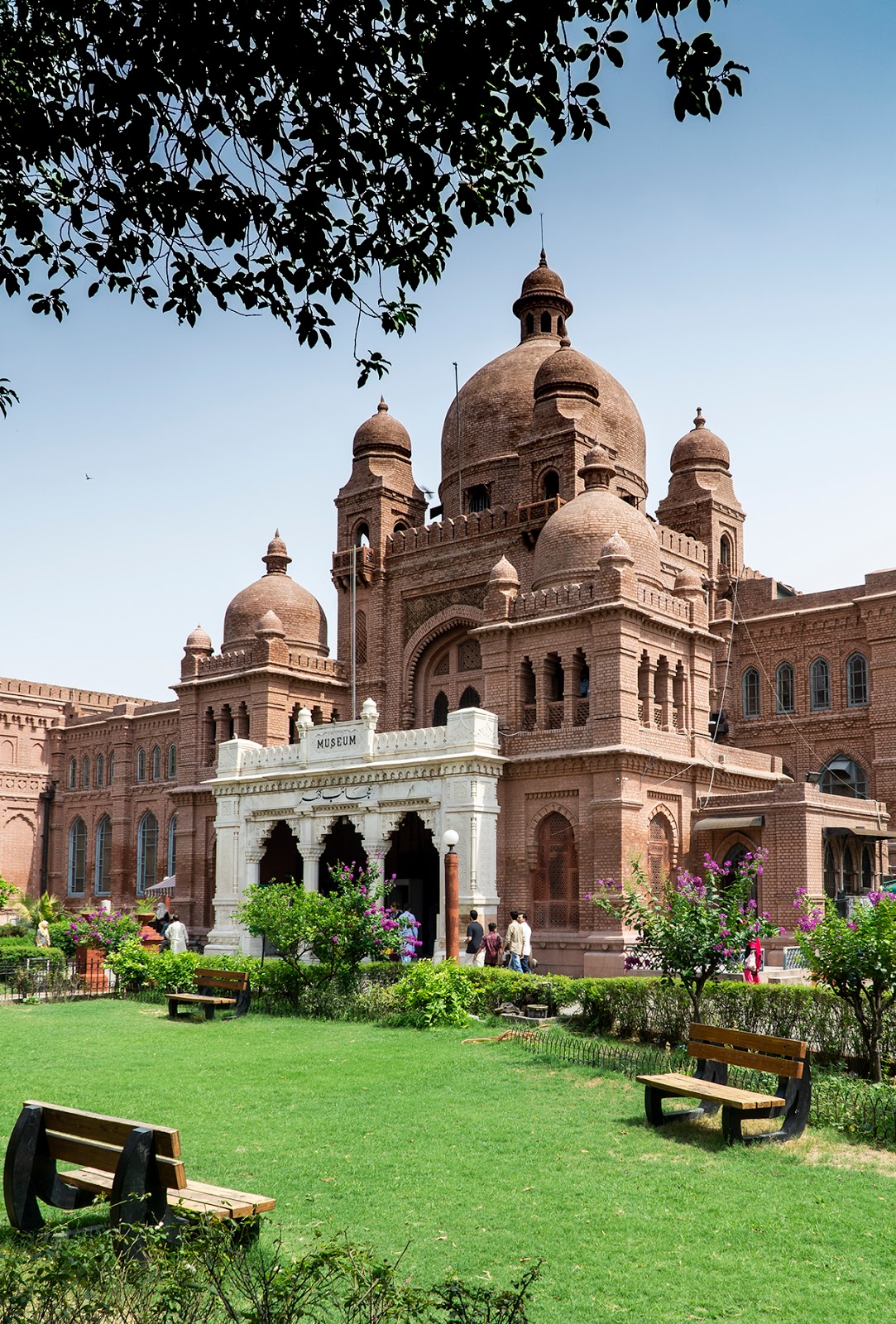
ZamZamma in front of the Lahore Museum (Author's collection, copyright 2019)
    I was recently in Lahore Pakistan and no visit there is complete without a stop at the Zamzamma and the Wonder House, in front of which it stands. These terms are, of course, from Rudyard Kipling's Kim and like every twelve year old boy prior to the eighties, I spent some of my time buried in the pages of that amazing book.  So, while I was at the Wonder House last week, I purchased a copy of Kim as an homage to a writer whose works helped shape my outlook on life.  Through those pages, I was delighted to, again, travel by te-rain through India and pursue Russians through the high passes of Afghanistan.
The facade of the Wonder House, Lahore (Author's collection, copyright 2019)
    The strange thing is that as I read the story for the first time in decades, I saw things from my adult perspective - not that of a twelve year-old boy who had never left the farm.  Here was a story I hadn't read before.  A story of intestinal fortitude and intrigue as its own reward that could have been placed anywhere in the last twenty years of the Wars on Terror.  The boyish fantasy which I remember was still there, but I didn't remember the extent of deep underlying foreboding and impending doom, as well as the heavy emphasis placed on personality assessment and exploitation.  I started to realise the depth of the storyline in this book and, over the course of the week, my internal monologue about this book started to sound like the post-film discussions I have had with my Daughter all her life.  Somewhere around 0230 yesterday, I realised that Kim was the fore-runner of the Disney-Pixar films.  These films have delighted families since 1995 by providing relevant, multi-dimensional entertainment for the entire family.  Children and parents alike were excited to go to these films because there was something in them for all and, in the end, there were hours of conversation stimulated by the cinematic experience.
    That is exactly what Kipling did with Kim.  Families discussed their interpretations of the subject matter because India is a foreign land to most Westerners; not to mention the unique and nebulous nature of the Great Game.  At the end of all this ruminating, I realised that Disney-Pixar - though incredibly talented and creative as a group - wasn't as innovative as I thought they were all those years ago.  They merely employed an age-old, proven technique for mass entertainment that had not been used for some time, so the novelty was palpable.  Rudyard Kipling made great use of this one hundred years before Disney in his timeless classic, Kim, as it is a vibrant and riveting story for children of any age that explores and challenges the instincts of us all.


Monday, July 1, 2019

MBA Notes from an Assassin (Part two of two)

    The Assassin's name was Bu Tahir Arrani and, unknown to anyone in the crowd on that October day in 1092, he was a Nizari Ismaili - an adherent to the sect of Hassan-i-Sabbah.  Sabbah had selected Arrani as the first of many highly trained assassins to disguise himself and travel alone from their stronghold deep in the Alborz Mountinas, north of Qazwin, on a secret mission of political intrigue.  This single man, working alone in the enemy's backyard, using only his wits and single-minded drive brought about a decade of relief for his persecuted sect by plunging Sabbah's rivals into leaderless confusion.  On the day that Arrani completed his mission, Alamut - his castle and home- was under siege by the Saljuq Turks.  Nizam himself had authorised the destruction of the Ishmaili headquarters because of their status as heretics (within the Saljuq Empire).  The year prior, Sabbah - with apparent knowledge of the impending siege, had launched Arrani on his one-way mission.
    Soon after Nizam's death, the siege of Alamut was lifted and within the year the Sultan had also died which plunged the Saljuq Empire into years of internecine struggle.  A struggle in which cousins and brothers were actively trying to murder each other in an attempt to rule - meanwhile, the Ishmailis were left alone in their mountain hideaway to enjoy their peace and quiet.


18th century sketch of Hassan-i-Sabbah

    This is a cautionary tale about market destabilisation and control of available marketshares.  Today, businessmen are trying to do more with less in an ever-increasingly erratic global economy but they seem to be changing their plans to fit the prevailing situation.  Conversley, Hassan-i-Sabbah used his business intelligence to create a far-reaching strategy that was simple, yet effective for the long term.  His desire was to create overall market instability by effecting the smaller composite markets through hostile intervention.  This, in turn allowed him to increase his control over the outcomes and, ultimately, control his marketshare.  He additionally created a niche market that in the long run provided unforeseen dividends through political manipulation.  All this was only possible through his absolute commitment to his well crafted business plan.  A plan which was set in motion more than a year before any results could materialise.  This is the true genesis of the Blue Ocean Strategy.

Monday, June 24, 2019

MBA Notes from an Assassin (part one of two)

Nahavand (present day Iran)
    The wandering Sufi had been there for days on end.  His requests for alms from the local merchants would have been a nuisance were it not for his supplications to Allah on behalf of his benefactors.  He, like so many other wandering mendicants of the time, carried a petition which begged everyone to sign.  this petition concerned some religious principle that was important to the individual Sufi and would eventually be sent to the Caliph for review and possible institution as a law in the book of Sharia.  So, with this dirty and wrinkled sheet of paper, our mendicant made his daily rounds; collecting signatures, meditating and begging alms but never straying too far from his chosen street corner.
    On the afternoon of 14 October 1092, a beautiful litter was carried down the street by four bearers who were surrounded by body guards.  The retinue heralded his arrival well in advance so that the streets were thronged with people trying to catch a glimpse of the most important administrator in the Saljuq Empire; Nizam al Mulk.  With a signature like Nizam's on his petition, surely, the Caliph would pay attention and therefore our dervish would be that much closer to heaven, so he pushed his way forward through the crowd.  He was filthy and quite brusque, so parting the crowd wasn't difficult and finding himself on the front line of the crowd, he was the picture of patient piety: a bedraggled and emaciated servant of Allah, awaiting his chance to fulfil his religious duty.  
    As the Saljuq Empire's great Wazir and sole adviser to the Sultan himself, Nizam, passed by, our beggar advanced with temerity towards the litter, calling audibly for the blessings of Allah to be placed upon the Wazir if only he signed this poor beggar's petition.  The Wazir heard him and allowed the holy man to approach his litter and for a moment a hush fell over the crowd.  As they silently cheered for their local beggar to succeed and the beggar's squalid rags lingered near the Wazir's opulent and colourful garments.  The beggar complied with the Wazir's request and handed over his petition dutifully - from such a lowly life station, the beggar dared not to explain anything to one such as the Wazir, he allowed the great man to read the petition for himself before signing.  During that moment of distraction, a moment caused by the Wazir himself, our mendicant priest pulled a dagger from his sleeve and plunged it repeatedly into the Wazir's chest.  The priest too died where he stood - hacked to pieces by the Wazir's body guards, once they recovered from their initial shock.  Afterwards, many eye-witnesses would claim that despite the opportunity for escape, the priest never even tried to get away.


The murder of Nizam al Mulk


Monday, June 3, 2019

Similarities over time


"The most beautiful experience we can have is the mysterious...Whoever doesn't know it and can no longer wonder, no longer marvel, is as good as dead..."
Albert Einstein


Lycurgus Cup in Both Forms

In the sixth book of the Homer's Iliad, King Lycurgus of Thrace chased the god of wine, Dionysus, into the sea before he set upon the god's entourage.  Amrosia, a member of this group, who was under duress, called upon the Earth to help and the Earth responded by changing Ambrosia into a vine.  Once in this form, Ambrosia restrained Lycurgus so that Dionysus could return and torture him for his insolence.  It is this scene that was immortalised on one of the most amazing works of art extant today.
Glass holds a special place in our world, it has been used to enchant, insulate, encase and torture for millennia and this cup continues that tradition.  Crafted some 1,700 years ago, this 16.25cm (6.5in) class vessel has only been known to the public since 1958 when the British Museum acquired it from the estate of Lord Rothchild. 
What has been known is man's special relationship with glass over time: American history is rife with legends of land transactions based on glass beads and the Sassanian empire had a great tradition of glasswork as well.  In fact, Islamic glassmaking techniques were distributed from Europe to China and their success stemmed from a combination of Roman and Sassanian techniques that were combined by the consolidation of the entire region by the Islamic expansion.  During the early years of Islamic rule, glassmakers of the eastern mediterranean continued using the Roman recipe which called for calcium-rich sand combined with the mineral natron which can be found in the area of Wadi al Natrun (today's Egypt).  The natron supply from this era was disrupted in the early 9th century AD and plant ash was substituted in its stead.  It seems that this forced adaptation led to the amalgamation of Sassanian and Roman techniques which spawned great innovations in the production of glassware throughout the world and, by the early 1300's resulted in exquisite examples of art like the Mosque lamp image (above) found in Egypt.

Today, our fascination with glass has not diminished.  During a 2013 exhibit in Virginia, I watched throngs of people walk, mouth-agape in wonder, through a Dale Chihuly exhibition.  His work is sought after the world over and appeals to the ancient human attraction to light in its many forms. 


Chihuly Glass Display, VMFA, Richmond, VA- 2013 from the author's collection

Our Lycurgus Cup is a unique example of glass' ability to reflect light in a way that changes the cup's color depending on the nature of light falling upon it.  In ambient light the cup is a milky, opaque green - but when light is shined directly on it, the glass appears as a translucent, ruby red

At work here is ancient nanotechnology: as a microscopic analysis of the glass shows it consists of 40 parts per million of gold and 300 parts per million of silver.  Of course there are more ingredients than silver and gold, this simple revelation of nanotechnology use 1,700 years ago brings us back to our original question:  What did the ancients know and why did we forget it?


Monday, May 27, 2019

New Beginnings

"Sing to me, Muse, of that endlessly cunning man, who was blown off course to the ends of the earth, in the years after he plundered Troy."

So begins one of the greatest books I've ever read and for the last three decades, like Odysseus, I have crisscrossed the globe for other masters - always keeping time to their drum.  Having recently freed myself from their shackles, I am inclined now to see some of the world on my own terms and enjoy my own schedule: when and how I want.

My fascination in life has always been the junction of ancient and modern.  Are we really an advanced society or is that just emotional comfort food for the technologically recalcitrant?  Ancient man clearly had advanced ideas about the world, but was it in a practical form like electricity and computers and why did we forget his knowledge?  The walls of the pyramids show an ancient light bulb and battery source while in the Acropolis Museum in Athens, Greece, an artefact from before Christ's time sits quietly.  We are told that this Antikythera Mechanism was created to predict celestial and astronomical developments years in advance, so this would qualify as a computer.  


Dendera Lightbulb

Why do we consider ourselves "advanced" if, a few decades ago, our first computers were the size of buildings and my Grand Mother grew up without electricity?  Instead of perceiving the world as we are instructed to, let's take on a more grassroots view of the world through the human eye.  How about if we endeavour to meet people not from individual nations with particular political views and agendas, but endeavour to meet people who make up the tapestry of humanity.  


Antikythera Mechanism

Schematic of Internal Mechanisms

   It is this tapestry that I intend to interact with and, through this medium, try to help others understand that the prejudice of our fathers is the reason our world is so divided today.  Besides the metaphysical aspects of life as a journey, the world's religions exhort their believers to travel as a means of meeting and understanding their fellow man.  Let's begin this journey of enlightenment together by removing our barriers to understanding.