Showing posts with label perspective.. Show all posts

Monday, September 30, 2019

Caught up in the Rush

    The temperature of the light is quite different in America than in Egypt but that is hard to see from my basement.  I've been stuck here since my return, processing images and accounting for finances.  That is the reason I have no entry for this week and I am making excuses instead of interesting analogies.
    Forgive me, my trespasses.

Swirling Clarity (Author's Collection copyright 2018)

Monday, September 16, 2019

Genetic Encoding, Part Two of Two

  In fact, in Egyptian history it is rare to find changes that were instigated by the masses.  External factors were almost always coming to bear on the people of this great country and those factors were typically “top down” changes.  

Cario in the morning
(Author's Collection, copyright 2019)

Adjusting to these changes was for them to deal with as leaders are rarely concerned with (and quite often unaware) of the daily difficulties that are enacted when they flippantly decide to do something.  Self-righteous Pharaohs, impetuous rulers, colonial oversight and exploitation by empires are but some of the ancient examples of difficulties that the average Egyptian had to contend with but the recent past isn’t any better.


Fast Food in Cairo's Market
(Author's Collection, copyright 2019)


    Recent political turmoil has built upon decades of questionable national level decisions which have created a poor educational system and created mass poverty (average annual income is 6,700USD).  A by-product of this situation is growing sectarian violence and increasing economic instability- the uneducated can’t be expected to make informed decisions or develop insightful philosophical points of view.  


Streets of Imbabah
(Author's Collection, copyright 2019)


In response, the Egyptian Government recently de-valued their currency (Egyptian Pound) and made severe cuts to public subsidisation/aide programs.  This was all in an effort to qualify for a large loan from the International Monetary Fund (IMF) which the Egyptian Government hopes will stimulate the economy before the more impoverished segment of society is crushed.  Does Egypt (or the world) really need another lane in the Suez Canal?


Egyptian Museum Entrance
(Author's Collection, copyright 2019)

Through all of this, as they have for millennia, Egyptians continue to adjust and compensate for the external factors pressing on their efforts for a better tomorrow.  Without considering all these historical factors, Egyptians live their lives and try to adapt to the radically changing socio-political and economic landscape; doing the best they can before the next change is forced upon them without their consent.  As though adaptation and adjustment have been imprinted in their genetic code.


Monday, September 2, 2019

A Code to Live By

    Our western traditions in the last 50 years have left something to be desired with regard to how we comport ourselves.  In the last twenty years it seems that people are more concerned with how they look than how they really are.  As proof, steal a glance at someone’s credit card bill next time you have a chance: 85% chance says it is disproportionately high indicating they are living outside their means.   I’ve even heard words like tradition and honour used as punchlines to jokes recently, though no one was ever laughing once I was done with the comedian.

 (Author's Collection. Copyright 2018)
    As a child, cowboy and samurai movies were our favourites because everyone knew what to expect, which means they had a code requiring they act in a certain manner.  While that was just Hollywood, these actions were based on a real code of honour that existed for a long time and allowed the world to function in a manner that imparted balance.  Historically, the warrior class has transcended cultures: the Knights of Europe could identify with the Persian cataphracts and both would have understood the code of Bushido embodied by the Japanese Samurai (attendant), and later, Bushi (warrior) class.
    From 1639 to 1854 AD, Japan employed the policy of sakoku (national isolation).  This was their response to dampen the myriad external pressures exerted on Japan while the Shogun consolidated his hold over the island.  This produced many peculiarities which make their culture so unique, of which, Bushido (the way of the warrior) is but one part.  An administrative restructuring under the Tokugawa Regime saw the Samurai removed from their rural landholdings and placed closer to their lord’s precincts.  Now being paid in rice instead of having to farm for their income, the Bushi found themselves very idle in their daily requirements.  This created the opportunity for a professional class of warrior never seen before: culminating in a daily regimen dedicated to the cultivation of all things martial.  The underlying influence exerted by Zen Buddhism created a thirst for perfection in all aspects of life for the warrior class of Japan and this can be seen today in the minute details associated with many of their martial arts.  Whether drawing a sword or flipping an opponent, the determination to emulate the Buddha in his quest for perfection permeated their daily lives and bled over into their efforts to pour tea or serenely sit while contemplating the world.
     This entire system was only attained through a concerted effort to codify and institutionalise the traditional practice of selected philosophies which, over the centuries, became cultural norm.  Ultimately, it was this cultural norm that empowered the feudal way of life and acquired a level of national discipline that would enable japan to adapt to the modern world so quickly.  
    It is the presence of a code of honour that is so lacking in modern society and which will ultimately be the basis for the ruination of humanity.  One must stand for something or agree to fall for everything.

 (Author's Collection. Copyright 2017)


Monday, July 29, 2019

Homecoming, another word for respite

    Under the warm, wet blanket of a Virginia summer's eve, I am standing on the curb at the airport arrival terminal, awaiting my ride home after a few weeks abroad.  This is where I love to be.  I have renewed my faith in mankind by viewing the countless happy reunions inside the terminal and, now, I am waiting on my own.  My wife will be here soon - she's caught in traffic.  After years of traveling for a living I still love this evolution and I have seen all forms that it can take.

Bazaar in Lahore Pakistan (Author's collection Copyright 2019)
    Parades and receptions have been the recent form of fanfare for returning heroes but that wasn't always the case.  Homer tells us that after twenty years of war fighting and mis-adventures, Odysseus returned only to find his home being ravaged, his wife being pressured to leave him and his kingdom on the brink of collapse.  Luckily, this most cunning man had the wherewithall to unmask and dispatch his enemies in one well-orchestrated stroke.  On the other side of Greece, in Mycenae, Agamemnon wasn't so lucky.  His wife and her lover killed him in his sleep.
    Perhaps, Agamemnon was delivered from himself in this tragic event: saved from a future that he couldn't see because of his desire to return home. Tennyson has followed up with an exploration of this sentiment.  Through the ageing eyes of Odysseus who, after fighting his way to the underworld and back with the sole purpose of regaining his home had become bored and longed for the adventure of travel once again.

...For always roaming with a hungry heart 
Much have I seen and known; cities of men 
And manners, climates, councils, governments,... 


Erg Chgagah, Morocco (Author's collection copyright 2015)
Travel is a heady concoction that plays on the senses like a highly addictive drug; eventually seducing you into what you try to rationalise is your last time.  Tennyson's Odysseus understood this intrinsically when, despite his advanced age, he stated his intention to turn his kingdom over to his son and roam the wine-coloured seas in search of adventure.
Japanese garden icon (Author's collection copyright 2019)

...Come, my friends, 
’Tis not too late to seek a newer world. 
Push off, and sitting well in order smite 
The sounding furrows; for my purpose holds 
To sail beyond the sunset, and the baths 
Of all the western stars, until I die. 
It may be that the gulfs will wash us down: 
It may be we shall touch the Happy Isles, 
And see the great Achilles, whom we knew. 
Tho’ much is taken, much abides; and tho’ 
We are not now that strength which in old days 
Moved earth and heaven, that which we are, we are; 
One equal temper of heroic hearts, 
Made weak by time and fate, but strong in will 
To strive, to seek, to find, and not to yield. 

So, I load my bags into the car and hug my Wife as though I haven't seen her in a lifetime.  We kiss and try to make up for lost time on the way home catching up on all the happenings since our separation.  Yet, although all this electrifying human interaction is genuine, it is perhaps made sweeter by the quiet realisation that this homecoming is really just another respite.

Aquarius Habitat, Key Largo, Florida, USA(Author's collection copyright 2015)

Sunday, July 21, 2019

Disney Wasn't the First

    My Daughter and I love to go to the cinema.  It is our go-to for our Daddy/Daughter date night.  After the film, we will talk for hours over burgers and chips discussing the subtle nuances of our most recent film.  In fact, our discussions often continue for days on this subject until we have begun to explore new ways of telling the same story and delved into fresh ideas about the meaning of the film and the intentions of the creators.
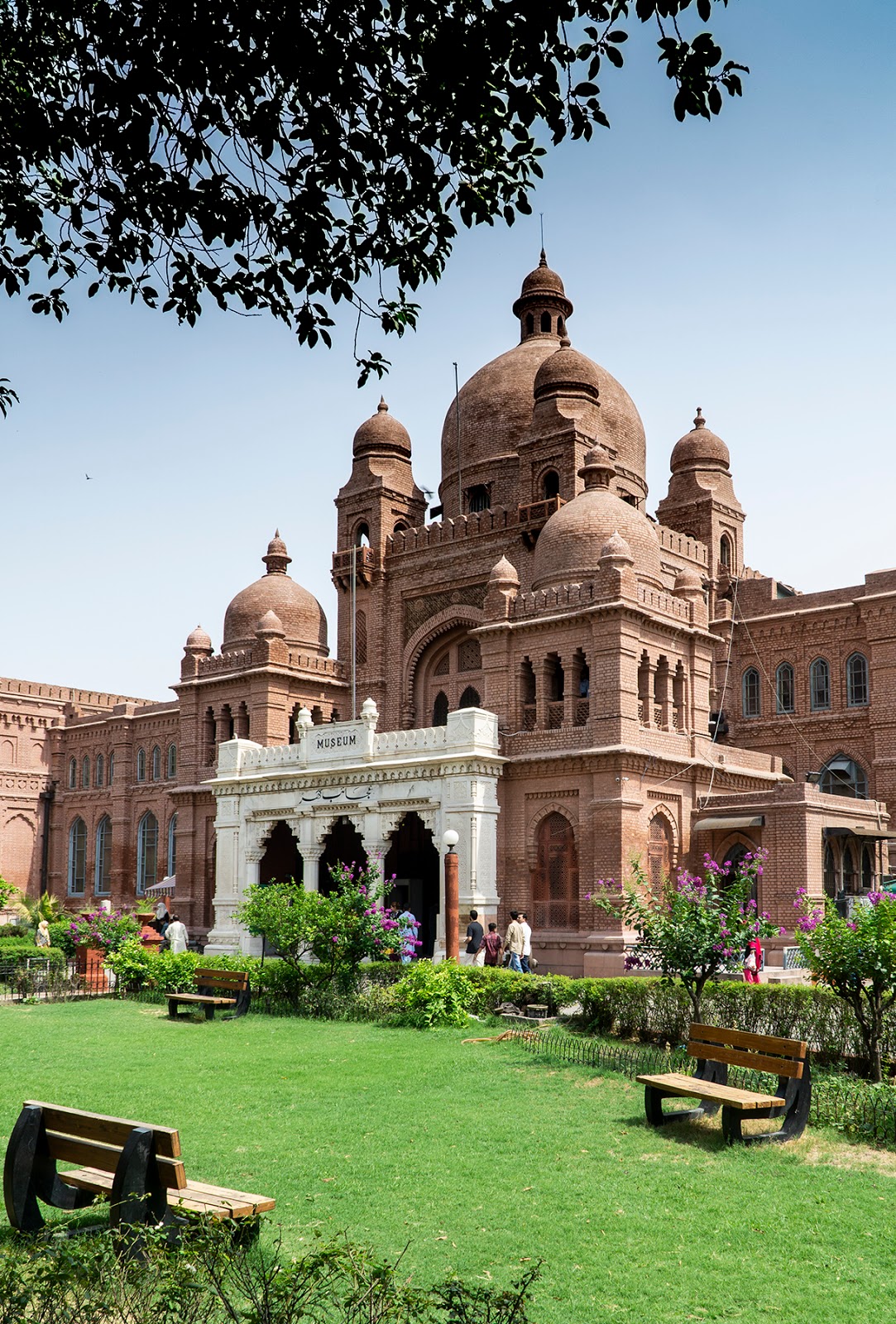
ZamZamma in front of the Lahore Museum (Author's collection, copyright 2019)
    I was recently in Lahore Pakistan and no visit there is complete without a stop at the Zamzamma and the Wonder House, in front of which it stands. These terms are, of course, from Rudyard Kipling's Kim and like every twelve year old boy prior to the eighties, I spent some of my time buried in the pages of that amazing book.  So, while I was at the Wonder House last week, I purchased a copy of Kim as an homage to a writer whose works helped shape my outlook on life.  Through those pages, I was delighted to, again, travel by te-rain through India and pursue Russians through the high passes of Afghanistan.
The facade of the Wonder House, Lahore (Author's collection, copyright 2019)
    The strange thing is that as I read the story for the first time in decades, I saw things from my adult perspective - not that of a twelve year-old boy who had never left the farm.  Here was a story I hadn't read before.  A story of intestinal fortitude and intrigue as its own reward that could have been placed anywhere in the last twenty years of the Wars on Terror.  The boyish fantasy which I remember was still there, but I didn't remember the extent of deep underlying foreboding and impending doom, as well as the heavy emphasis placed on personality assessment and exploitation.  I started to realise the depth of the storyline in this book and, over the course of the week, my internal monologue about this book started to sound like the post-film discussions I have had with my Daughter all her life.  Somewhere around 0230 yesterday, I realised that Kim was the fore-runner of the Disney-Pixar films.  These films have delighted families since 1995 by providing relevant, multi-dimensional entertainment for the entire family.  Children and parents alike were excited to go to these films because there was something in them for all and, in the end, there were hours of conversation stimulated by the cinematic experience.
    That is exactly what Kipling did with Kim.  Families discussed their interpretations of the subject matter because India is a foreign land to most Westerners; not to mention the unique and nebulous nature of the Great Game.  At the end of all this ruminating, I realised that Disney-Pixar - though incredibly talented and creative as a group - wasn't as innovative as I thought they were all those years ago.  They merely employed an age-old, proven technique for mass entertainment that had not been used for some time, so the novelty was palpable.  Rudyard Kipling made great use of this one hundred years before Disney in his timeless classic, Kim, as it is a vibrant and riveting story for children of any age that explores and challenges the instincts of us all.


Monday, July 1, 2019

MBA Notes from an Assassin (Part two of two)

    The Assassin's name was Bu Tahir Arrani and, unknown to anyone in the crowd on that October day in 1092, he was a Nizari Ismaili - an adherent to the sect of Hassan-i-Sabbah.  Sabbah had selected Arrani as the first of many highly trained assassins to disguise himself and travel alone from their stronghold deep in the Alborz Mountinas, north of Qazwin, on a secret mission of political intrigue.  This single man, working alone in the enemy's backyard, using only his wits and single-minded drive brought about a decade of relief for his persecuted sect by plunging Sabbah's rivals into leaderless confusion.  On the day that Arrani completed his mission, Alamut - his castle and home- was under siege by the Saljuq Turks.  Nizam himself had authorised the destruction of the Ishmaili headquarters because of their status as heretics (within the Saljuq Empire).  The year prior, Sabbah - with apparent knowledge of the impending siege, had launched Arrani on his one-way mission.
    Soon after Nizam's death, the siege of Alamut was lifted and within the year the Sultan had also died which plunged the Saljuq Empire into years of internecine struggle.  A struggle in which cousins and brothers were actively trying to murder each other in an attempt to rule - meanwhile, the Ishmailis were left alone in their mountain hideaway to enjoy their peace and quiet.


18th century sketch of Hassan-i-Sabbah

    This is a cautionary tale about market destabilisation and control of available marketshares.  Today, businessmen are trying to do more with less in an ever-increasingly erratic global economy but they seem to be changing their plans to fit the prevailing situation.  Conversley, Hassan-i-Sabbah used his business intelligence to create a far-reaching strategy that was simple, yet effective for the long term.  His desire was to create overall market instability by effecting the smaller composite markets through hostile intervention.  This, in turn allowed him to increase his control over the outcomes and, ultimately, control his marketshare.  He additionally created a niche market that in the long run provided unforeseen dividends through political manipulation.  All this was only possible through his absolute commitment to his well crafted business plan.  A plan which was set in motion more than a year before any results could materialise.  This is the true genesis of the Blue Ocean Strategy.

Monday, June 24, 2019

MBA Notes from an Assassin (part one of two)

Nahavand (present day Iran)
    The wandering Sufi had been there for days on end.  His requests for alms from the local merchants would have been a nuisance were it not for his supplications to Allah on behalf of his benefactors.  He, like so many other wandering mendicants of the time, carried a petition which begged everyone to sign.  this petition concerned some religious principle that was important to the individual Sufi and would eventually be sent to the Caliph for review and possible institution as a law in the book of Sharia.  So, with this dirty and wrinkled sheet of paper, our mendicant made his daily rounds; collecting signatures, meditating and begging alms but never straying too far from his chosen street corner.
    On the afternoon of 14 October 1092, a beautiful litter was carried down the street by four bearers who were surrounded by body guards.  The retinue heralded his arrival well in advance so that the streets were thronged with people trying to catch a glimpse of the most important administrator in the Saljuq Empire; Nizam al Mulk.  With a signature like Nizam's on his petition, surely, the Caliph would pay attention and therefore our dervish would be that much closer to heaven, so he pushed his way forward through the crowd.  He was filthy and quite brusque, so parting the crowd wasn't difficult and finding himself on the front line of the crowd, he was the picture of patient piety: a bedraggled and emaciated servant of Allah, awaiting his chance to fulfil his religious duty.  
    As the Saljuq Empire's great Wazir and sole adviser to the Sultan himself, Nizam, passed by, our beggar advanced with temerity towards the litter, calling audibly for the blessings of Allah to be placed upon the Wazir if only he signed this poor beggar's petition.  The Wazir heard him and allowed the holy man to approach his litter and for a moment a hush fell over the crowd.  As they silently cheered for their local beggar to succeed and the beggar's squalid rags lingered near the Wazir's opulent and colourful garments.  The beggar complied with the Wazir's request and handed over his petition dutifully - from such a lowly life station, the beggar dared not to explain anything to one such as the Wazir, he allowed the great man to read the petition for himself before signing.  During that moment of distraction, a moment caused by the Wazir himself, our mendicant priest pulled a dagger from his sleeve and plunged it repeatedly into the Wazir's chest.  The priest too died where he stood - hacked to pieces by the Wazir's body guards, once they recovered from their initial shock.  Afterwards, many eye-witnesses would claim that despite the opportunity for escape, the priest never even tried to get away.


The murder of Nizam al Mulk


Monday, June 17, 2019

Georgia, The Reason Travel Was Invented? (Part two of two)

View from Meteo Station on Mt. Kazbeg (Author's collection, Copyright 2014)
     

    Not too long after that - but long enough for the Greeks to forget their first alphabet- there was another interest in Georgia.  A generation before the Trojan War (1205BC) this interest was on behalf of the Greeks in their search for the Golden Fleece.  Colchis is on the eastern end of the Black Sea in modern day Georgia.
      There is much speculation over the exact location of the Colchian capitol but most agree it was either Kutaisi, Poti or Vani - each located along the Rioni River.  At any rate, the examples of gold smithing skills on display in Tbilisi's Georgian National Museum from that period are amazing and there is historical evidence that western Georgian gold mining techniques included using a sheepskin to pan the rivers.  Remember that this gold washed out of the Greater Caucasus Mountains - where Mt Kazbeg lies.
    In mythology, Jason and his intrepid crew of heroes that history has dubbed the Argonauts after their vessel, the Argo, made this daunting voyage to Georgia and we can place this story along a realistic timeline because Peleus was an Argonaut and the father of Achilles, who died at Troy.  So, despite all the adventures along the way (and back), Jason's real goal was to procure the golden fleece and procure it he did - as well as a wife, Medea, the daughter of the Colchian king, Aietes, who is the only reason they lived to depart Colchis.  
    
Archaeological excavation in Vani, Georgia (Author's collection, Copyright 2014)

    Further credence is lent to the interaction with Georgian society by a Greek Tragedy Play, "Medea", in which the couples stormy divorce is chronicled: Medea kills her three children by Jason, as well as Jason's new Fiancee, Glauke, prior to escaping in a flying chariot.  The credence is lent by the world renowned spite and fury embodied by Georgian women when scorned.
    These small details are the qualifiers that are overlooked in history.  The facts that, despite seeming to be trivial, are proof that a myth is actually history.  It is these qualifiers that we must turn a jaundiced eye upon in order to sift through the sands of time that obscure the past from our view.

Monday, June 10, 2019

Georgia, The Reason Travel Was Invented? (part one of two)

    A Georgian myth claims that Georgia was the land that God reserved for himself because of its natural beauty and abundant productivity.  Mankind seems to agree with this statement as he has been traveling there since the dawn of time and perhaps this region is the very reason for the concept of travel itself.  Historical vignettes may supply us with proof.
Dmanisi, Georgia (Authors collection, copyright 2014)
    As early as 1.8 million years ago, Georgia was attracting visitors.  A group of Hominids that we call Homo Erectus were the first human species to migrate out of Africa.  Since 2005, five skulls have been discovered near the Georgian town of Dimanisi - all within a 9.2 square metre area (~100 feet squared).  Because these skulls differ greatly, it is theorised that they represent a cross section of the species, in general, and are forcing scientists to re-evaluate the existing theories.  The most recent skull has a brain cavity about half the size of modern humans and a large face; if these were fragments, they would be categorised as different species.  The difficulty for scientists is that they were found together, a long way from Africa and within a 9.2 square metre area.  Scientists are now theorising that this species was more diverse than previously thought and the findings in Dimanisi may lead to grouping all homo fossils dated 1.8 to 1.5 million years old into a new, Homo Erectus family.


View from near Amirani’s(Prometheus’) prison on Mt. Kazbeg (Author's collection, Copyright 2014


More recently, on the summit of Mt. Kazbegi (5,054m), Amirani - we call him Prometheus - was imprisoned for giving fir to humans.  An added punishment was that an eagle would peck out his liver all day and over night, it would grow back.  The question is, Why in Georgia?  Was that because it was close to God's home?  Where better to keep an eye on a recalcitrant child than your backyard?
    It seems that before the dawn of time, before we were even ourselves, we were attracted to the bounty that is Georgia; the land that God reserved for himself and hasn't strayed too far from since.


Monday, June 3, 2019

Similarities over time


"The most beautiful experience we can have is the mysterious...Whoever doesn't know it and can no longer wonder, no longer marvel, is as good as dead..."
Albert Einstein


Lycurgus Cup in Both Forms

In the sixth book of the Homer's Iliad, King Lycurgus of Thrace chased the god of wine, Dionysus, into the sea before he set upon the god's entourage.  Amrosia, a member of this group, who was under duress, called upon the Earth to help and the Earth responded by changing Ambrosia into a vine.  Once in this form, Ambrosia restrained Lycurgus so that Dionysus could return and torture him for his insolence.  It is this scene that was immortalised on one of the most amazing works of art extant today.
Glass holds a special place in our world, it has been used to enchant, insulate, encase and torture for millennia and this cup continues that tradition.  Crafted some 1,700 years ago, this 16.25cm (6.5in) class vessel has only been known to the public since 1958 when the British Museum acquired it from the estate of Lord Rothchild. 
What has been known is man's special relationship with glass over time: American history is rife with legends of land transactions based on glass beads and the Sassanian empire had a great tradition of glasswork as well.  In fact, Islamic glassmaking techniques were distributed from Europe to China and their success stemmed from a combination of Roman and Sassanian techniques that were combined by the consolidation of the entire region by the Islamic expansion.  During the early years of Islamic rule, glassmakers of the eastern mediterranean continued using the Roman recipe which called for calcium-rich sand combined with the mineral natron which can be found in the area of Wadi al Natrun (today's Egypt).  The natron supply from this era was disrupted in the early 9th century AD and plant ash was substituted in its stead.  It seems that this forced adaptation led to the amalgamation of Sassanian and Roman techniques which spawned great innovations in the production of glassware throughout the world and, by the early 1300's resulted in exquisite examples of art like the Mosque lamp image (above) found in Egypt.

Today, our fascination with glass has not diminished.  During a 2013 exhibit in Virginia, I watched throngs of people walk, mouth-agape in wonder, through a Dale Chihuly exhibition.  His work is sought after the world over and appeals to the ancient human attraction to light in its many forms. 


Chihuly Glass Display, VMFA, Richmond, VA- 2013 from the author's collection

Our Lycurgus Cup is a unique example of glass' ability to reflect light in a way that changes the cup's color depending on the nature of light falling upon it.  In ambient light the cup is a milky, opaque green - but when light is shined directly on it, the glass appears as a translucent, ruby red

At work here is ancient nanotechnology: as a microscopic analysis of the glass shows it consists of 40 parts per million of gold and 300 parts per million of silver.  Of course there are more ingredients than silver and gold, this simple revelation of nanotechnology use 1,700 years ago brings us back to our original question:  What did the ancients know and why did we forget it?


Monday, May 27, 2019

New Beginnings

"Sing to me, Muse, of that endlessly cunning man, who was blown off course to the ends of the earth, in the years after he plundered Troy."

So begins one of the greatest books I've ever read and for the last three decades, like Odysseus, I have crisscrossed the globe for other masters - always keeping time to their drum.  Having recently freed myself from their shackles, I am inclined now to see some of the world on my own terms and enjoy my own schedule: when and how I want.

My fascination in life has always been the junction of ancient and modern.  Are we really an advanced society or is that just emotional comfort food for the technologically recalcitrant?  Ancient man clearly had advanced ideas about the world, but was it in a practical form like electricity and computers and why did we forget his knowledge?  The walls of the pyramids show an ancient light bulb and battery source while in the Acropolis Museum in Athens, Greece, an artefact from before Christ's time sits quietly.  We are told that this Antikythera Mechanism was created to predict celestial and astronomical developments years in advance, so this would qualify as a computer.  


Dendera Lightbulb

Why do we consider ourselves "advanced" if, a few decades ago, our first computers were the size of buildings and my Grand Mother grew up without electricity?  Instead of perceiving the world as we are instructed to, let's take on a more grassroots view of the world through the human eye.  How about if we endeavour to meet people not from individual nations with particular political views and agendas, but endeavour to meet people who make up the tapestry of humanity.  


Antikythera Mechanism

Schematic of Internal Mechanisms

   It is this tapestry that I intend to interact with and, through this medium, try to help others understand that the prejudice of our fathers is the reason our world is so divided today.  Besides the metaphysical aspects of life as a journey, the world's religions exhort their believers to travel as a means of meeting and understanding their fellow man.  Let's begin this journey of enlightenment together by removing our barriers to understanding.